
A Complete Beginner’s Guide to Safe Crypto Storage
When you first start using cryptocurrencies, one of the most important issues you’ll have is how to store your coins safely. With frauds on the rise and hackers continually adapting, understanding the difference between hot wallets and cold wallets is critical.
This tutorial explains everything in simple words, allowing you to confidently preserve your digital assets.
- What Is a Hot Wallet?
A hot wallet is a cryptocurrency wallet that remains connected to the internet. These wallets are particularly popular among novices because they are simple to set up and useful for daily transactions.
Popular Hot Wallets
- MetaMask
- Trust Wallet
- Coinbase Wallet
Benefits of Hot Wallets
- Quick and easy access to your cryptocurrency
- Suitable for daily use, trade, and DeFi interactions.
- User-friendly apps and browser extensions
Risks of Hot Wallets
- Internet exposure raises the danger of hacking.
- Not suitable for huge estates.
- vulnerable to phishing assaults and viruses.
Best use case: Small amounts you plan to use or trade frequently.

- What Is a Cold Wallet?
A cold wallet is a cryptocurrency wallet that remains offline, making it the most secure way to keep digital assets over time.
Popular Cold Wallets
- Trezor Model One / T
- Ledger Nano S / X
Benefits of Cold Wallets
- No internet connection = exceedingly tough to hack.
- Perfect for long-term holding (HODLing).
- Protected from most internet risks.
Risks of Cold Wallet
- More expensive because of hardware costs.
- Not very convenient for frequent trade.
- Must be stored carefully to avoid physical damage or loss
Best use case: Large crypto holdings and long-term storage.
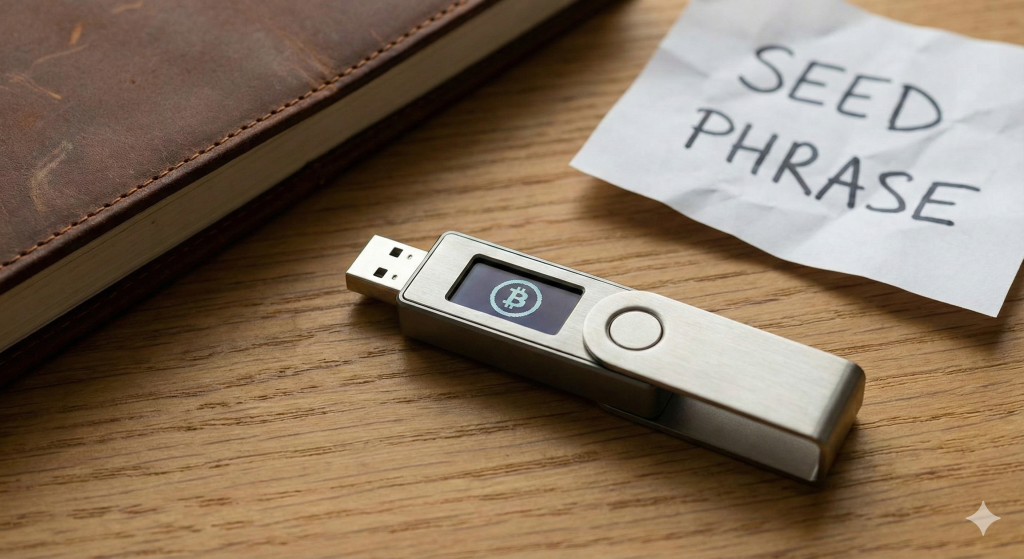
Hot Wallet vs Cold Wallet: Which Should You Choose?
| Feature | Hot Wallet | Cold Wallet |
|---|---|---|
| Internet Access | Yes | No |
| Security Level | Moderate | Very High |
| Ease of Use | Very Easy | Moderate |
| Cost | Free | Paid (hardware) |
| Best For | Daily transactions | Long-term storage |
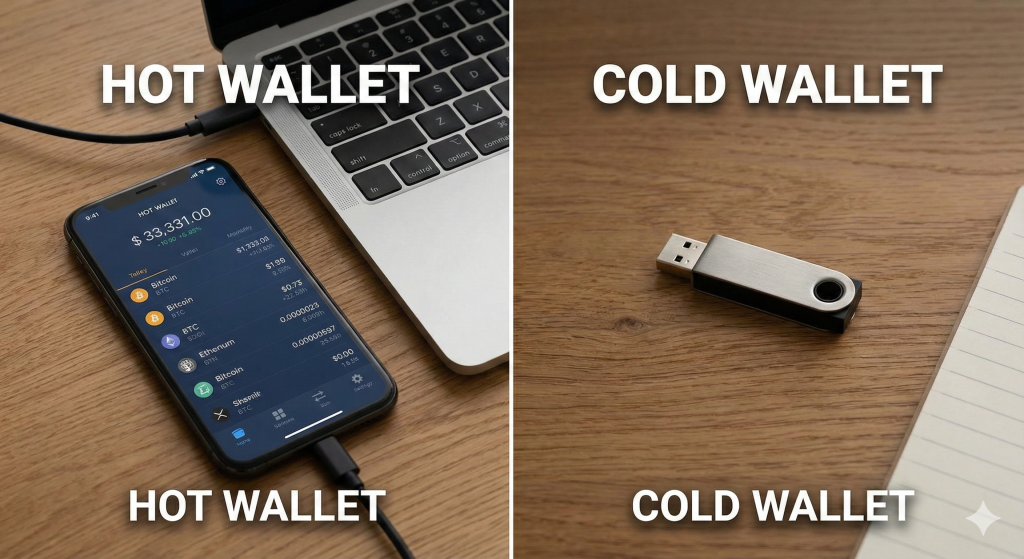
Use a hot wallet for spending or trading and a cold wallet for serious long-term crypto storage.
Essential Crypto Security Rules (Must-Know for Beginners)
Protecting your cryptocurrency is entirely your responsibility. Losses from mistakes or scams are frequently irrevocable; thus, adhering to basic crypto security guidelines is critical.
Avoid these common cryptocurrency mistakes.
Never reveal your seed phrase.
- Your seed phrase is the master key. Anyone who has it can take your assets.
Never click on dodgy links.
- Phishing sites frequently mirror legitimate platforms. Always double-check the URLs.
Never join “giveaway” groups.
- If anything sounds too good to be true, it is a hoax.
Never keep huge amounts online.
- Hot wallets and exchanges are ideal hacking targets.

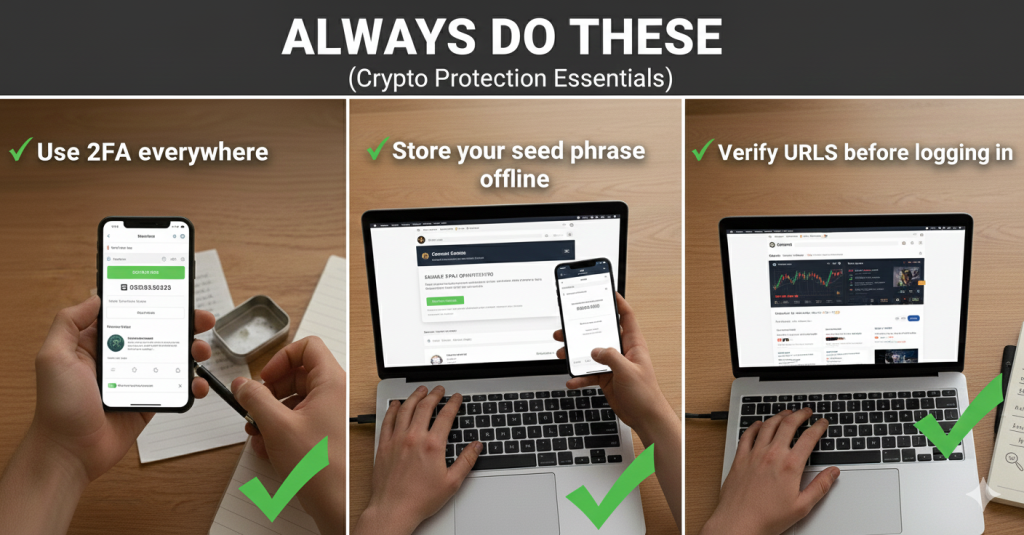
Always Do These (Crypto Protection Essentials)
Enable 2FA everywhere.
- Enable two-factor authentication on all of your cryptocurrency accounts.
Save your seed phrase offline.
- Never write anything down digitally; instead, use paper or metal backups.
Verify URLs before logging in.
- Bookmark official websites to avoid phishing scams.
Do Your Own Research (DYOR).
- Before investing in any project or platform, you should first understand it.
Final Thoughts: Protect Your Crypto Like a Pro
Whether you’re deciding between a hot wallet and a cold wallet, or you want to understand how to avoid cryptocurrency frauds, the goal is to be informed and secure.
Use hot wallets for convenience, cold wallets for security, and always adhere to basic crypto protection guidelines.
A few wise behaviors can help you avoid costly mistakes and keep your digital assets safe for the long term.